
Milwaukee Girlhood to Milwaukee Leadership: Tiffany’s Full-Circle Journey

Before she was a leader shaping the future of Milwaukee, Dr. Tiffany Tardy Grant was a young girl trying to understand where she fit in the world.
PEARLS’ President and CEO grew up in Milwaukee and has now returned to foster growth in the same communities. This insider look offers powerful insight into what defining girlhood, reckoning with identity, and understanding leadership can look like in our city. It is a story of curiosity, defining belonging, and the ongoing, looping, introspective journey from girlhood to womanhood.
When Tiffany reflects on herself as a young girl in Milwaukee, the first word she uses is simple but telling: different.
“As a girl, I was different. I was always extremely smart and extremely curious, and I read a lot when I was young. But I didn’t necessarily understand myself or where I fit in.”
She was a girl who felt most comfortable immersed in books and ideas. But alongside that intellectual confidence was a quieter uncertainty. Even while continuously succeeding in school, she didn’t always feel she knew where she fit as a person.
Tiffany describes herself then as quiet and introverted, the kind of student who often built stronger connections with teachers than with peers. Naturally, academics became a source of strength and a place of comfort. Socially, however, was much more challenging to sort where she was meant to land.
Much of Tiffany’s schooling took place in gifted and advanced academic tracks at Golda Meir, Rufus King and beyond. While her schools themselves were extremely diverse, those particular classrooms often were not. She frequently found herself in predominantly white spaces, surrounded by peers who did not share her lived background or experiences.
She instead found belonging in places where ideas and advancement mattered.
“That’s when I found community—when I got into debate and forensics. It was like, okay, these are my people.”
Those spaces allowed her to connect with others through processes like, thought, research, and argument. It was the first time she felt a true sense of community. An intellectual community, where she was celebrated for her voice and her own particular perspective.
“I really appreciated being in community with people who liked the thought of doing random research and building arguments.”
For Tiffany, connection came through the mind. Thinking deeply, questioning boldly, and creating meaning, not through social convention, but through authenticity and passion.
But girlhood is about so much more than academics and activities. It is a formative time that begins to shape belief systems, navigate beauty standards, and the quiet, constant ways culture offers girls to measure themselves against the world around them.
She speaks candidly about not feeling pretty when she was young, not feeling desired, not feeling like she fit the dominant standard of beauty around her. In peer groups that were largely white, she saw how affirmation and attention often flowed elsewhere.
Like many young girls, Tiffany also traversed through adolescence without a great deal of guidance in certain areas. She did not have the kind of intimate conversations that might have helped her process boys, beauty, identity, or becoming. Instead, she was left, in many ways, to figure girlhood out on her own.
That, too, is part of the universal story of girlhood: the hidden ache of trying to become yourself without enough mirrors reflecting you back with love. It can be difficult to see what you are trying to embody if you cannot picture it.
At the time, she also lacked the historical and cultural context that might have helped her interpret many of her experiences.
“I didn’t even understand what it meant to be a Black woman or a Black person in America until I went to college.”
That profound realization came through taking African American Studies classes at University of Wisconsin Madison. This was a season of transformation in how she saw herself and the world.
“That class changed my life. It was like, oh—there’s a whole framework for the things I’ve gone through.”
Suddenly, the questions she had carried during girlhood had context. Her experiences were not isolated, they were connected to a rich history, and shared stories of culture and community.
Looking back, she sometimes wonders what might have been different if she had learned those lessons earlier.
“I do wonder what my life would have looked like had I been able to have the level of confidence and security in who I am when I was younger.”
That reflection is part of what drives the work she does today.
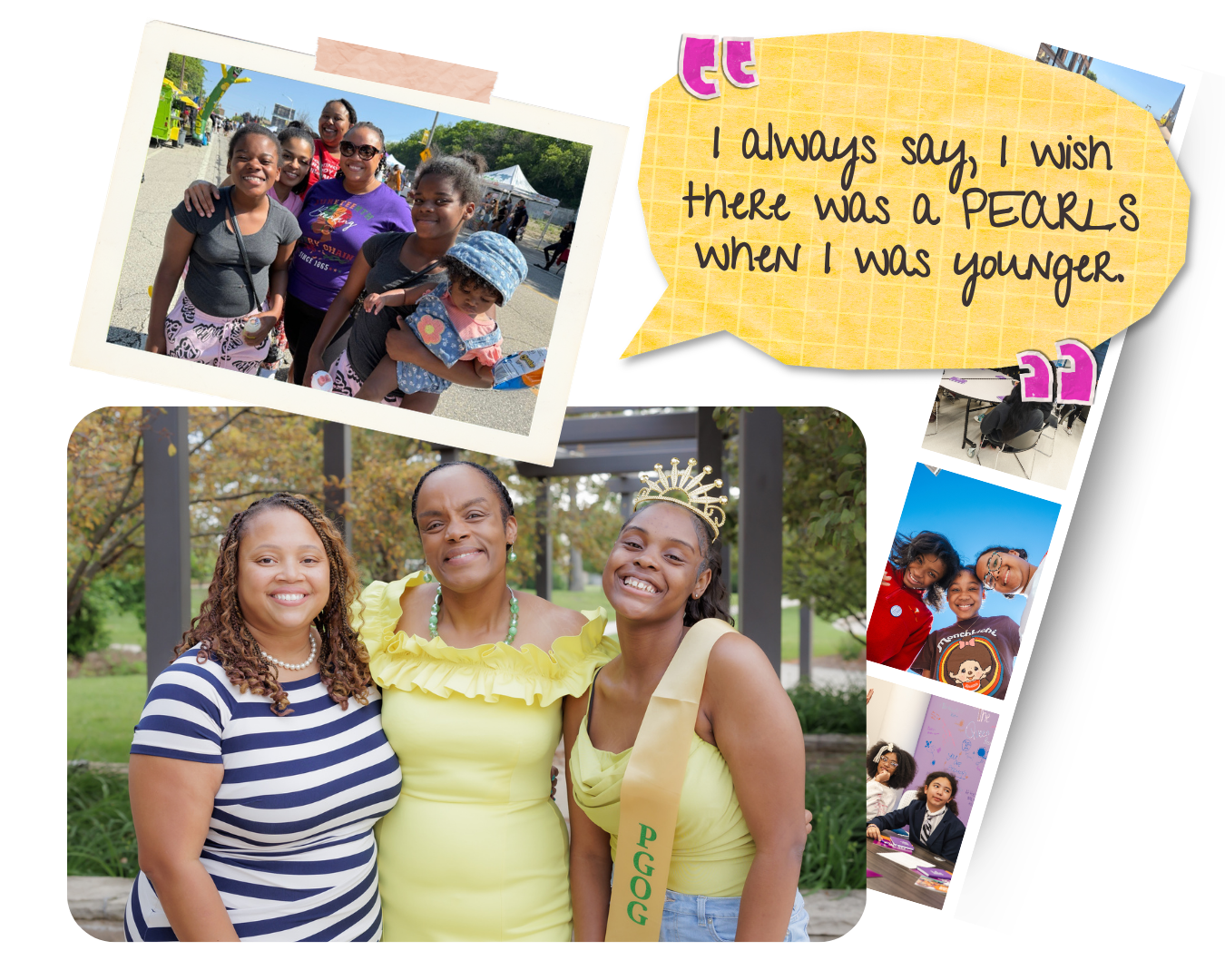
Her career in higher education and nonprofit leadership became deeply connected to that desire, to create the spaces she once needed.
Throughout her career, she has been drawn repeatedly to mentoring and supporting young women, particularly young women of color. Students gravitated toward her, trusting her guidance, inherently coming to realize Tiffany always had their best interest at heart.
That pull became a defining part of her professional path.
Today, that commitment has come full circle.
As a CEO and leader in Milwaukee, Tiffany is working to strengthen the very community that helped shape her. The experience, she says, feels both meaningful and complex. As a child, she did not fully understand the structural challenges facing Milwaukee. With the perspective of adulthood and leadership, she now sees those realities clearly.
Alongside that awareness is a deep sense of pride. She describes herself as a product of a city that has shaped countless leaders, innovators, and changemakers. Many of the peers she grew up with have gone on to do extraordinary work across the country and around the world.
“There are so many folks who have come out of Milwaukee who do exceptional work. I believe in that ripple.”
Her story is not just about her own personal success it is about return in service of her hometown.
“It feels very full circle to say that I came from this community and now I’m doing everything I can to give back to this community.”
For Tiffany, leadership is clearly not just a position; it really is a commitment to transformative change.
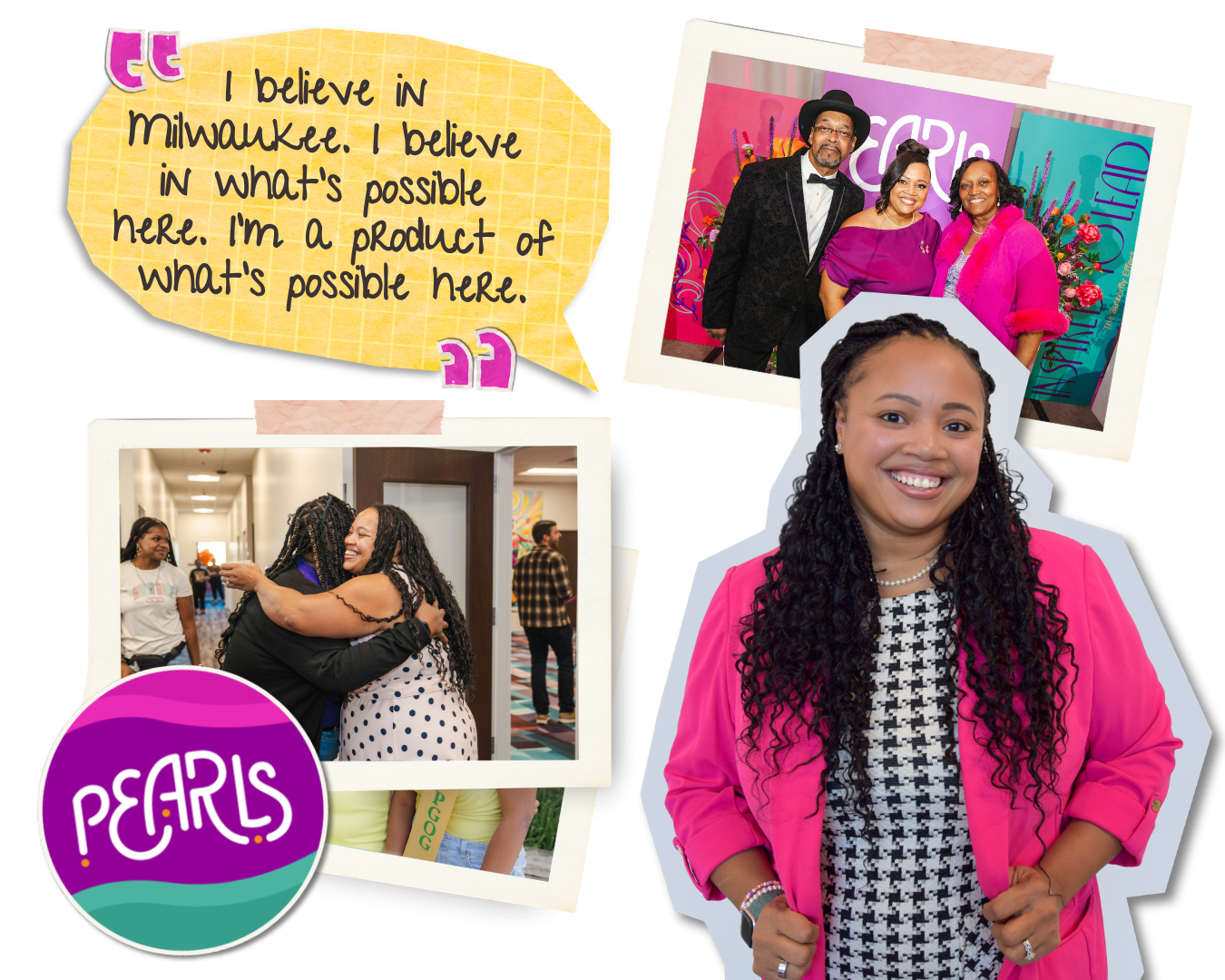
And perhaps that is the most powerful part: the girl who once wondered where she fit is now helping create spaces where other girls can belong and help them cocreate what belonging looks like.
“There’s so much work to do. But it fuels me.”
Tiffany models something important about girlhood and womanhood alike: you do not have to have been fully seen as a girl to become a woman who sees others clearly. You do not have to have belonged everywhere to build spaces of belonging. You do not have to have been perfectly confident to then become a powerful leader.
This is the beauty of full-circle stories. They do not diminish what was hard. We honor it. This shows us that the girl who once wondered where she fit can grow into the woman who helps others find their place.
Thank you, Dr. Tiffany Tardy Grant, for letting your whole self shine as you lead PEARLS and help define how Milwaukee can shape powerful leaders from each individual girlhood to their full potential.
With gratitude,
The PEARLS Team